May 11, 2026 | written by: Tommaso Ciuffoletti


Biodiversity is a complex word used to describe something very simple: the variety of life on Earth. But behind this simplicity lies a delicate system, made up of relationships, balances, and invisible dependencies. In this article, we’ll try to explain it as we would to a child, using images and concrete examples. Without trivializing it, but making it understandable. Because understanding biodiversity is not just a scientific exercise: it is the first step toward taking care of the world we grow up in.
Let’s start with an image
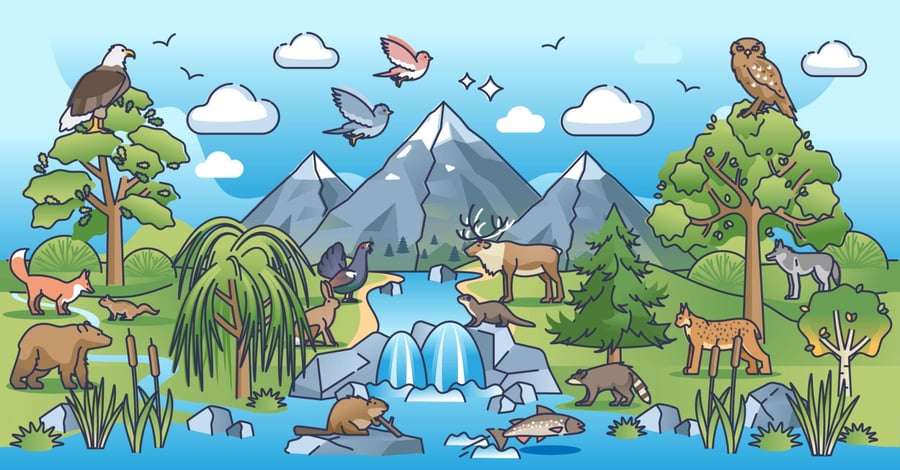
Imagine walking into a forest. You see different trees—some tall and slender, others short and wide. You hear birds singing, insects moving, maybe a stream flowing nearby. If you stop for a moment, you realize that everything is different from everything else.
That’s biodiversity: all the variety of life that exists on Earth.
Not just the most visible animals and plants, but also:
- microorganisms in the soil
- fungi growing underground
- insects we often don’t notice
It’s like a vast network made up of many different forms of life. At this point, someone might say: “Okay, so biodiversity just means there are many different species.”
Yes—but that’s not enough.
Biodiversity is not just a list. It is, above all, the way all these forms of life live together.
Imagine a football team. It’s not enough to have many players: each one needs a role, they need to cooperate, to pass the ball. Nature works in a similar way.
Trees produce oxygen → Insects pollinate flowers → Animals eat and are eaten → The soil becomes richer and allows new plants to grow.
👉 Biodiversity is this continuous collaboration.
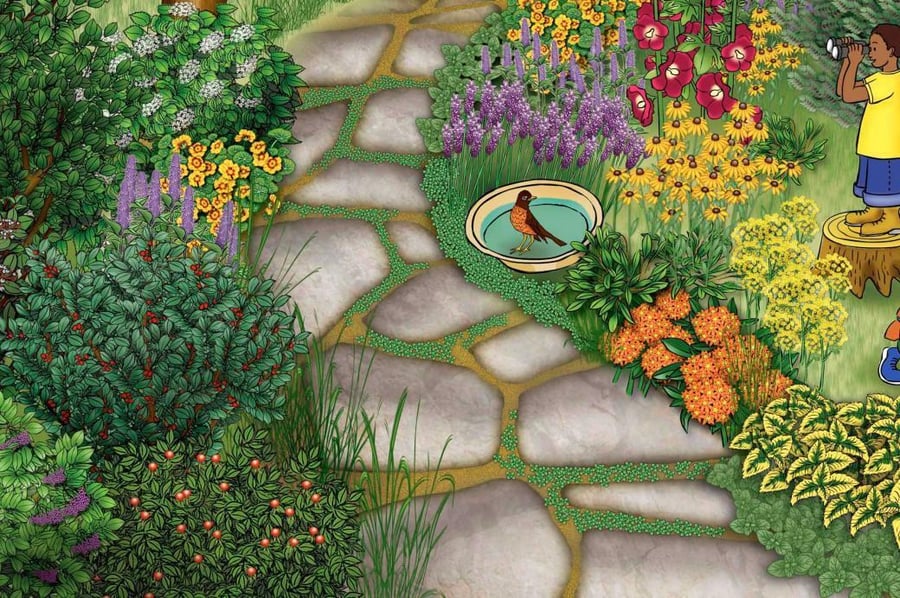
Let’s simplify it even further. Think of a meadow. If it’s made only of grass, it’s simple. If instead there are different flowers, insects, butterflies, bees, earthworms… it becomes richer.
That meadow:
- will be more resistant to drought
- will attract more animals
- will adapt better to change
👉 More biodiversity means more balance.
What happens when biodiversity decreases?
Now try to imagine the opposite. Picture the same meadow, but the bees disappear.
At first, nothing obvious happens. But then some flowers stop growing because they are no longer pollinated. With fewer flowers, fewer insects arrive. With fewer insects, some birds can no longer find food.
And little by little, the system weakens.
👉 Biodiversity is like a balance: when something is missing, everything changes.
Why it matters
Here comes the most important part. Biodiversity doesn’t only concern “distant” nature. It directly affects our lives—especially the lives of children.
According to UNICEF, biodiversity is essential because it:
- ensures food (through agriculture and healthy ecosystems)
- helps keep water clean
- protects health (by reducing diseases and imbalances)
- makes environments safer and more livable
In other words:
without biodiversity, the world becomes less stable, less safe, and less livable—especially for those who still have to grow up in it.
Something hard to see (but real)
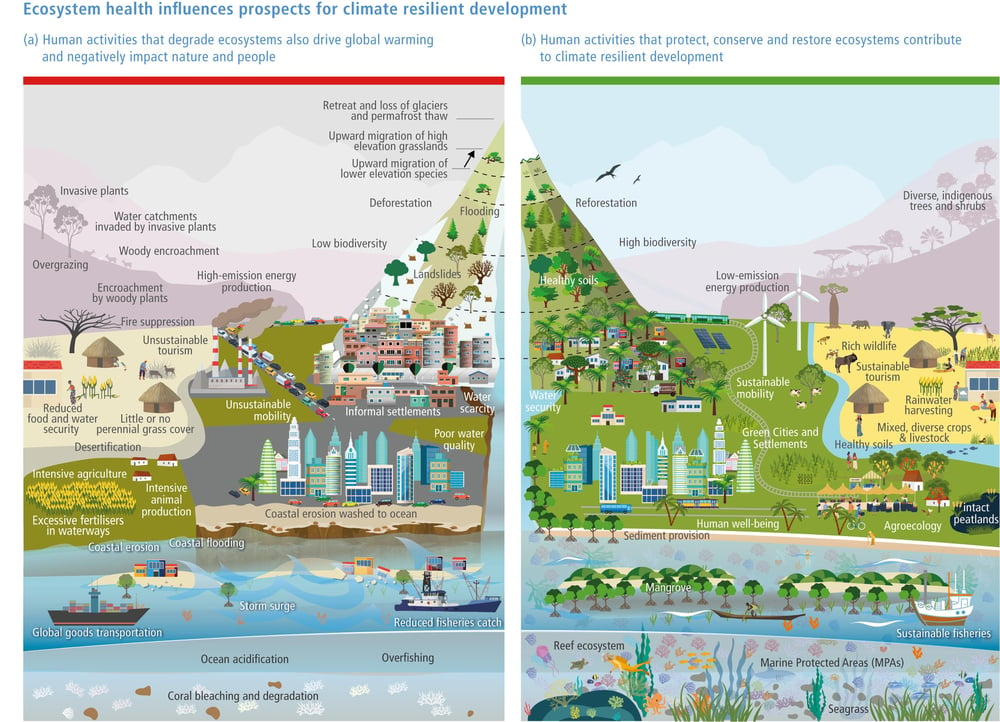
There is, however, a difficulty. Biodiversity is not always clearly visible. It’s not like a tree falling or a river drying up.
Often, it changes slowly, almost silently.
That’s why scientists try to measure it. They study species, soil, ecosystems. They try to understand whether an environment is healthy or not.
But—and this is important—it’s not easy.
Because biodiversity is complex:
- it changes over time
- it depends on many factors
- it is made of invisible relationships
👉 It’s not something that can easily be reduced to a single number.
So why do we try to measure it?
If it’s so complex, why do we try to measure it? Because without measurement, it’s difficult to protect it.
It’s a bit like a fever: it’s not the whole illness, but it helps us understand that something is wrong.
In the same way, biodiversity indicators:
- don’t tell the whole story
- but help us understand whether an ecosystem is in balance
👉 Measuring doesn’t mean oversimplifying. It means understanding enough to be able to act.
A different way of looking at the world
In the end, talking about biodiversity also changes the way we see things.
A tree is no longer just a tree. It’s a home for insects, birds, fungi.
A meadow is no longer just grass. It’s a system full of relationships.
And we are not outside of all this. We are part of it.
If we really had to explain it to a child, we might say:
biodiversity is everything that lives on Earth and the way all of it lives together.
And add one more thing:
the richer it is, the better the world works.
It’s not a perfect definition. But it’s true enough to start understanding. And maybe that’s the point: you don’t need to understand everything right away.
You just need to start looking at the world knowing that every form of life—even the smallest—has a role.
And that taking care of it means, ultimately, taking care of ourselves.

