


Nov 09, 2026 | written by: Tommaso Ciuffoletti


"I've never seen snow." I have a Nepalese friend named Sanjeeb, who has been living in Italy for many years. He now lives in Rome, and when we first met in Florence, about 12 years ago, he told me something about his country that I found hard to believe: he had never seen snow. I remember being surprised. How can someone from Nepal have never seen snow? Isn't it the country of Everest, glaciers and the highest mountains in the world?
In fact, it's perfectly possible. Sanjeeb comes from a village not far from the Indian border, in a hilly area where the landscape and climate have little in common with those of the high Himalayas. And his story reminds us of something: we often know a country through a handful of images, which eventually turn into stereotypes. Nepal is a perfect example.
So let's challenge a few common assumptions and discover six things you may not know about this extraordinary country.
1. Nepal is more than just mountains
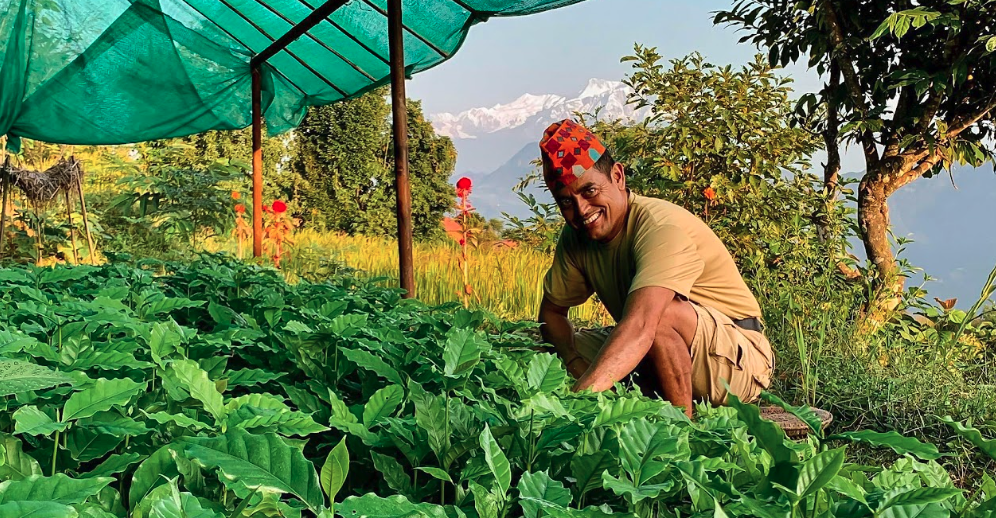
Let's start with Sanjeeb's story. Nepal has the greatest altitudinal range of any country in the world: from the southern Terai plains, at around 60 metres above sea level, to the summit of Everest, at 8,848 metres. And all of this within a strip of land just 150–250 kilometres wide, from north to south.
Between these two extremes lies an extraordinary variety of landscapes: subtropical plains, forests, hills, valleys, agricultural terraces and, of course, the great mountains of the Himalayas. In the south of the country, the climate can also be hot and humid, with summer temperatures that can easily exceed 40°C.
In short, Nepal is not all Everest and glaciers. It is a country of very different climates, landscapes and ecosystems. And not everyone who lives there has ever had the chance to see snow.
2. Are all Nepalese people Buddhists?
It's an almost automatic association: Nepal, monasteries, monks, prayer flags and Buddhism. After all, Siddhartha Gautama, the Buddha, was born in Lumbini, in what is now Nepal.
And yet, according to the 2021 national census, 81.2% of the population is Hindu, while Buddhists account for around 8.2%. Other religious communities include Muslims, Christians and followers of indigenous traditions.
Nepal is therefore a predominantly Hindu country, where Buddhism nevertheless has extraordinary historical and cultural significance. The two traditions have coexisted for centuries, influencing one another. In many places of worship, symbols and practices from both religions can be found side by side.
One more interesting fact: Nepal was officially a Hindu kingdom until 2008, when it became a secular republic.
3. What language do people speak in Nepal?
Nepali is the country's official and most widely spoken language, but it is not everyone's mother tongue. According to the 2021 census, Nepal is home to no fewer than 124 mother tongues.
Some of the most widely spoken include Maithili, Bhojpuri, Tharu, Tamang and Newari, each associated with different communities, regions and traditions. Nepali is the mother tongue of around 45% of the population and also serves as a common language for communication between different groups.
This linguistic diversity reflects the country's cultural richness: the census recorded 142 ethnic and caste groups. Behind the image of an apparently homogeneous country lies a mosaic of communities, identities and traditions.
4. Who are the Sherpa?
In the Western imagination, whenever we think of Nepal and expeditions to Everest, the word Sherpa almost inevitably comes to mind. We often use it as a generic term for the guides and porters who accompany climbers in the mountains.
But Sherpa is first and foremost the name of a specific ethnic group, originally from eastern Tibet and now mainly settled in the valleys of the Nepalese Himalayas. Their history is closely linked to livestock farming, mountain agriculture and, more recently, mountaineering.
The Sherpas' extraordinary experience on Himalayan expeditions has made their name famous around the world. But not all Nepalese people are Sherpa, and not everyone who works on mountaineering expeditions belongs to this community. It's a bit like assuming that all Italians are Alpine troops simply because we have the Alps!
5. More than tourism and mountaineering
Everest, trekking, expeditions, adventure tourism. These are probably the first things that come to mind when we think about Nepal. And yet, for millions of people, everyday life still revolves around agriculture.
According to the FAO, agriculture involves around 66% of the population and plays an important role in the national economy. Rice, maize, wheat, fruit, tea, coffee and livestock are essential resources for families and rural communities.
Much of this production comes from small-scale farms, often family-run, which have to contend with difficult terrain, limited areas of cultivable land and increasingly variable climatic conditions. This is a side of Nepal that rarely features in tourist photographs, yet it is essential to understanding the country: a world of terraced fields, orchards, farming villages and people who work the land every day.
And this is precisely where projects like Treedom's come in: integrating trees into local farming systems to diversify production and help create new resources for communities.
6. Mountains are not as immovable as they seem
Here we are at the final common misconception. Perhaps the hardest one to challenge, because mountains are the very symbol of what we imagine to be stable, solid and unchanging. And yet they, too, are constantly evolving.
Nepal was reminded of this in dramatic fashion on 26 August 2026, when a massive collapse of ice and rock on the slopes of Langtang Lirung triggered a devastating chain of events. The material that came crashing down generated a debris flow and a powerful flood wave that swept through areas along the Bhote Koshi and Trishuli river systems, destroying infrastructure and severely affecting local communities.
The sequence of events was complex. Global warming is profoundly altering the balance of Himalayan ecosystems: glaciers are retreating, permafrost is degrading and slope stability is changing. It is not possible to directly attribute this particular collapse to climate change, but global warming is contributing to the transformation of the physical conditions of these mountains.
And as the mountains change, the territories at their feet face new challenges too.
This is where trees also make a difference. When integrated into farming systems, they can help hold the soil on terraces and reduce erosion, enrich biodiversity, provide new fruits and diversify the food and economic resources available to farming families.
This is what agroforestry projects are all about: trees growing alongside other crops, becoming part of a system in which the environment, agriculture and communities are closely interconnected.
We, too, can help change the face of the mountains. We cannot stop major geological and climatic processes, but we can take part in caring for the landscapes and agricultural environments that surround them.
Because mountains are never still. And what grows at their feet can make a difference.

