



Dec 04, 2025 | written by: Tommaso Ciuffoletti


Plants in the Bedroom: Busting a Myth
You often hear that keeping plants in the bedroom is risky because “at night they consume oxygen and release carbon dioxide.” In reality, there’s nothing dangerous about sleeping with plants in the room.
It’s true that many plants, without light, stop photosynthesis: during the night they “breathe” like we do, consuming a little oxygen and releasing CO₂. But the amount is infinitesimal - so small that even people who share their bed with a pet (cat or dog) are exposed to far more CO₂ than what plants release. And no one would ever advise against sleeping with a pet.
Moreover, many plants do perform photosynthesis during daylight hours: they absorb carbon dioxide and release oxygen. Over a full day, the oxygen they produce far exceeds what they “take back” at night. And above all: “impure air” indoors is about far more than the tiny bit of CO₂ produced by plants. We’re talking about toxic volatile organic compounds (VOCs formaldehyde, benzene, toluene, etc.) released by paints, furniture, adhesives, detergents; fine dust; poor ventilation in tightly sealed homes; and excessive or insufficient humidity.
From this point of view, some houseplants can offer a useful contribution, although - as many experts point out - they cannot replace proper ventilation, cleaning, or a mechanical aeration system.
In short: the idea that “plants suffocate you at night” is a myth. Of course, it’s better not to fill your bedroom with dozens of potted plants - and maybe remember to open the window every now and then!
The Benefits of Having Plants in the Bedroom
Beyond the reassurance that they’re not harmful, several scientifically plausible factors make plants a great addition to the bedroom. Here are the main ones:
-
Absorption of VOCs - Some plants can absorb volatile organic compounds like formaldehyde, benzene, and toluene—released by furniture, paints, building materials, and detergents. This can help improve indoor air quality, especially in poorly ventilated rooms.
-
Humidity regulation - Through transpiration, plants can help regulate indoor humidity. In dry environments, this may ease dryness of mucous membranes, throat, and skin.
-
Psychological and wellbeing effects - A room with plants often feels more relaxing, natural, and “homely.” This can support relaxation, reduce stress, and help with mental preparation for sleep.
-
Some plants release oxygen at night - Certain species (so-called “CAM plants”) follow a form of photosynthesis that allows them to release oxygen at night. With these, there’s the extra perk of a little nighttime oxygen boost.
That said, as experts remind us, expectations should stay realistic: one or two plants won’t magically eliminate dust or pollutants—that still requires ventilation, cleaning, and perhaps air purifiers.
10 Ideal Bedroom Plants
Here are 10 plants that are particularly well-suited for the bedroom—easy to care for, visually pleasing, and offering small “superpowers” for air quality or mood.
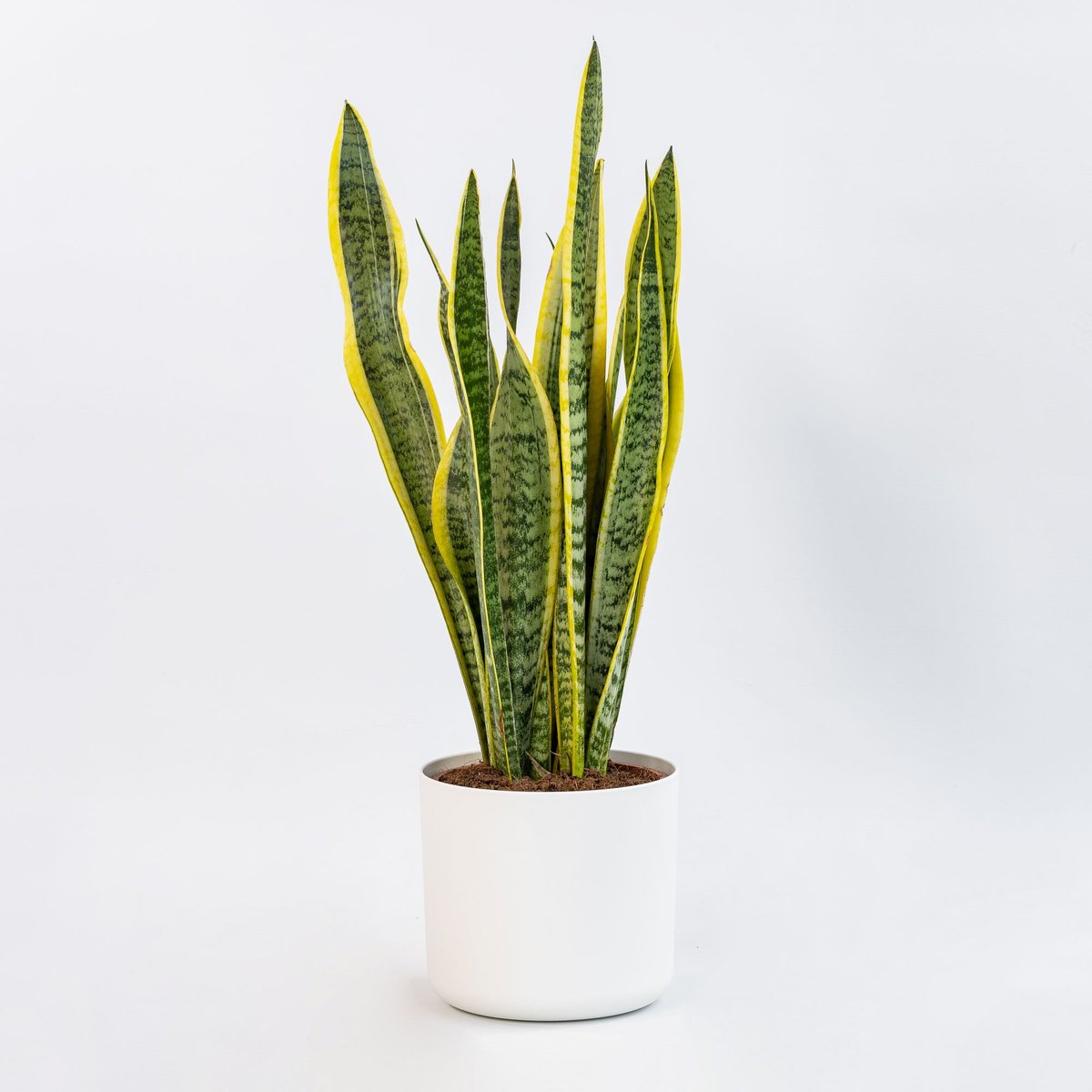


Sansevieria trifasciata – “snake plant”
One of the top choices for bedrooms: extremely resilient, tolerant of low light, and requiring very little maintenance. As a CAM plant, it can release a bit of oxygen even at night.
Very easy to care for, perfect for “non–green thumbs.” It’s often cited as an effective plant for absorbing certain indoor pollutants.
Spathiphyllum (peace lily)
Elegant, with glossy green leaves and occasional white flowers. Thrives even in low-light rooms with indirect light, and can help filter out certain airborne toxins.
Aloe vera
Beyond its well-known benefits for the skin (!!), it’s frequently recommended for bedrooms: simple to care for, and according to some sources, it can help keep the air feeling “fresher” at night.
Dypsis lutescens (Areca Palm)
If you have space, a palm adds an exotic and soothing touch. It’s considered helpful in improving indoor humidity and, according to some guides, in filtering pollutants.
Nephrolepis exaltata (Boston fern)
For a more lush, green aesthetic, ferns bring a relaxing, natural presence. Some sources list them among plants that help “freshen” the air.
Epipremnum aureum (pothos)
A climbing plant suitable for shelves or corners, great if you want greenery without using floor space. Commonly recommended as an indoor plant that can absorb certain household pollutants.
Lavandula angustifolia (lavender)
Not the strongest performer in terms of purification, but excellent for relaxation thanks to its fragrance. Often suggested as a “zen” plant that supports better sleep.
Jasminum jasminoides (jasmine)
If you love flowers and natural scents, jasmine is a fantastic choice: its fragrance is calming and helps create a soothing atmosphere.
Hedera helix (ivy)
A climbing plant that’s easy to care for and suitable for small or hanging spaces. Great for softening corners and adding natural charm without taking up floor area.
A Few Notes of Caution (Nothing Dramatic)
Plants are not a replacement for fresh air: ventilation—opening windows and letting air circulate—remains essential.
If you suffer from allergies, asthma, or pollen sensitivity, some plants (or their flowering cycles, or dust on the leaves) may not be ideal. Choose simple plants with smooth leaves and clean them regularly.
Avoid excess: there’s no need for an indoor jungle—a few well-placed plants are enough for a pleasant and beneficial effect.
In Conclusion: Yes to Bedroom Plants—With Awareness
Bedroom plants are not only harmless; they can add real value—as long as expectations remain reasonable. If you want a scientific and thoughtful approach, the best way to view them is as a complement: a touch of green, a modest help for air and humidity, a boost for psychological wellbeing.
And then, why not? If that potted plant inspires you to go a little further, you can plant a tree—perhaps with Treedom: a small gesture for you, a big gesture for the planet.

