


Oct 20, 2026 | written by: Tommaso Ciuffoletti


From books and handmade objects to plants and shared experiences, here is a guide to choosing Christmas gifts that say something about us, the people we care about, and the world we live in.
DISCLAIMER: This is not just another random list of websites!
“A cynic is a man who knows the price of everything and the value of nothing.”
Oscar Wilde’s famous line was written more than a century ago, yet it feels particularly relevant at this time of year, when we spend so much time searching for, comparing and buying things to give as presents. How much does it cost? Is it beautiful enough? Is it the right model? Will it arrive on time?
These are perfectly reasonable questions. But perhaps there is another one we should ask first when choosing a gift: what do we really want to give this person?
It might be a useful object whose value lies in the care with which it was made, a memory, or an experience to enjoy — perhaps together. Or it might be an opportunity to become part of a story, support a project or contribute to something we believe in.
That is where we can begin thinking about sustainable Christmas gifts for 2026. Rather than offering just a list of products, although we will suggest plenty of ideas, this guide starts with a broader approach. Some gifts may be made from recycled materials or carry reassuring environmental claims. Whatever we choose, the aim is to find something selected with care, designed to last, likely to be used, and capable of saying something about both the giver and the recipient.
A successful gift is not necessarily the most expensive or the most original. It is the one that shows we have thought about another person: their wishes, their values and the things we have in common.
And sometimes, a gift can also be a way to support the kind of future we would like to live in.
Books and magazines, chosen with care
A book can be one of the most personal gifts imaginable — provided, of course, that we do not choose it simply because it is a bestseller or because we like the cover.
We might give someone a novel that kept us company during a particular moment in our lives, an essay that answers a question they have been exploring, or an illustrated book connected to one of their passions. We could also look for an old edition, an out-of-print title or a second-hand book in excellent condition.
The added value does not necessarily lie in the rarity of the book. It lies in the fact that choosing it shows we know something about the person who will receive it. We could even add a handwritten note explaining why that particular title made us think of them.
Where to look? Start with an independent bookshop in your area. If you have a subject or passion in mind, ask the booksellers for advice. In the weeks before Christmas, it is worth getting started early: you will have more time to find a particular title, order it or discover an alternative.
Second-hand bookshops and market stalls are also worth exploring. They can be wonderful places to find unexpected treasures at affordable prices. If you prefer to shop online, consider ordering directly from the publisher.
For inspiration, explore Treedom’s blog, including our BookToKnow series, which looks at books that help us understand nature, science and the world around us, as well as Roots of words, a series about how we relate to nature.
A bonus idea: gift a subscription - Magazines and newspapers do not always come to mind as Christmas gifts, but an annual subscription can be a thoughtful present that keeps arriving throughout the year. A digital subscription is another option, whether for a magazine or a newspaper. For readers interested in international affairs, culture and ideas, consider The Guardian, The New York Times, or The New Yorker. For science and discovery, there is New Scientist, while National Geographic is a natural choice for anyone who loves wildlife, photography, geography and the environment.
The best choice depends on the person receiving the gift: what they like to read, how often they read and whether they prefer print or digital. Before subscribing, check that gift subscriptions are available in their country.
Art, design and handmade gifts
Ceramics, textiles, illustrations, small design objects and accessories made by craftspeople can tell a story about the value of skilled work and knowledge passed down through generations.
In a market full of mass-produced goods, a mug made in an independent studio or a print bought directly from its artist can have a story of its own. Often, that story is precisely what makes the gift interesting.
Of course, handmade does not automatically mean sustainable. An artisan object can still be unnecessary, fragile or made from unsuitable materials. It is worth looking at quality, usefulness, repairability and provenance whenever that information is available.
The aim is not to fill our homes with more things, but to find one object that deserves a place in them for years to come.
Where to look? If you know a craftsperson, ceramicist, illustrator or local maker, start there. Think about the people and places you have encountered, and revisit your memories. You could visit a workshop, a small independent shop or a craft market. Seeing how an object is made can help us understand its value.
If you prefer to browse online, Etsy is a starting point for ceramics, prints, jewellery and personalised creations. Look for sellers who explain their work, check where each item is made and find out which materials are used. Not everything sold on a marketplace is handmade or sustainable, so it is worth looking beyond the photographs.
A bonus idea: buy directly from the artist - Another option is to buy directly from the website of an illustrator, ceramicist or small design studio whose work you have followed for a while. This helps you get to know the maker and, where possible, support their work more directly.
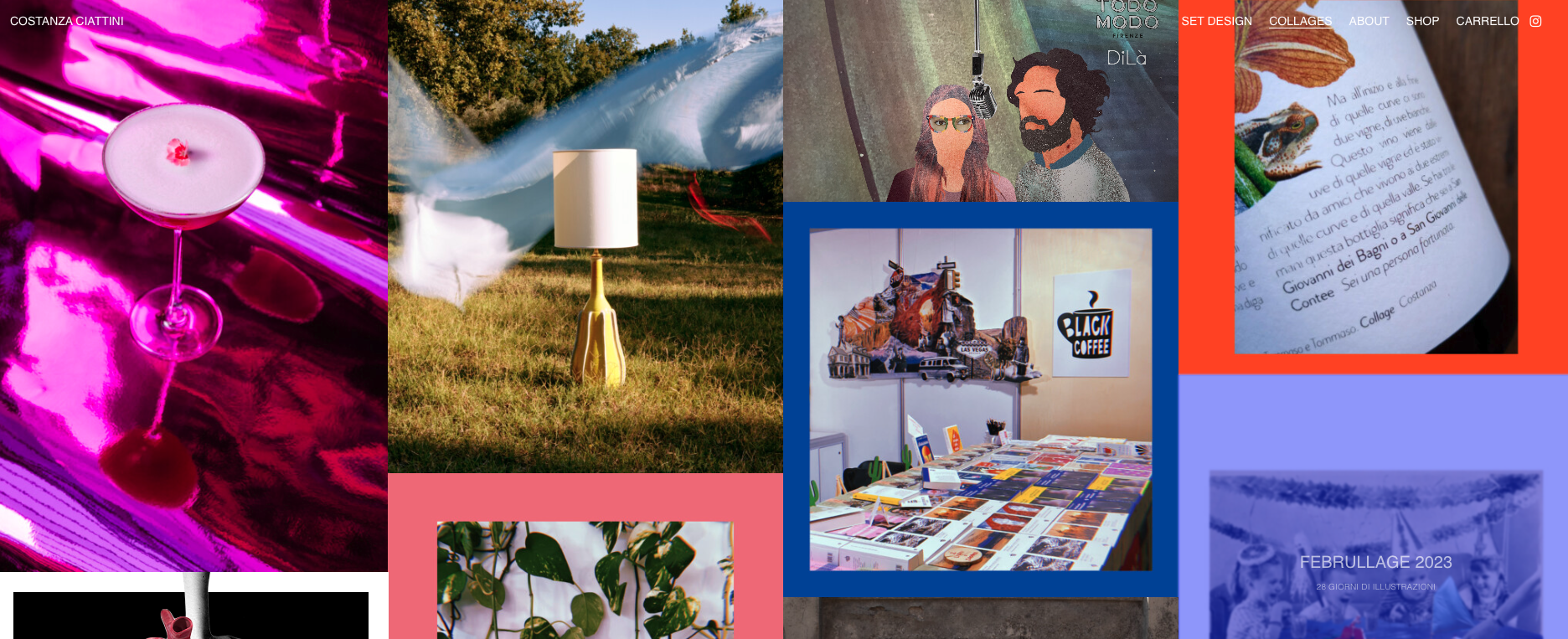
For a small independent project inspired by the history of the village my father's family comes from, I have worked with several artists from Florence. Two whose work I would recommend exploring are Costanza Ciattini, whose Christmas creations are worth a look, and Claudia Bessi, an illustrator with a particularly elegant style.
A second-hand gift
Some gifts become interesting precisely because they are not new. A vinyl record, an analogue camera, a vintage bag or a restored piece of furniture: looking for a pre-owned object often means spending more time choosing, until we find something that could never have been replaced by a hurried purchase.
From an environmental perspective, reusing an object can avoid some of the impacts associated with manufacturing a new one, particularly when buying second-hand genuinely replaces a new purchase. The benefits depend on the type of product, its condition, how long it can still be used and what is involved in restoring it.
There is another reason to appreciate this kind of gift: an object with a past can have a distinctive personality. A worn cover, a small imperfection or an unfashionable detail may make it more interesting, not less.
Where to look? Before opening a website, visit second-hand shops, flea markets and vintage stores in your area. Sometimes, going in without a precise idea is the best way to find the very thing you did not know you were looking for.
Online, eBay can be useful for collectibles, design objects and a wide range of pre-owned goods, while Vinted is a starting point for second-hand clothing and accessories. Availability and categories vary by market. Read item descriptions carefully, check the condition and the seller's reputation, and choose things you believe the recipient will genuinely use.
Reuse makes sense when it extends the life of something, not when it becomes another excuse to accumulate possessions.
A bonus idea: discover vintage design - If you are looking for vintage furniture and design in Florence, I can recommend Modernaria, which specialises in original pieces from the twentieth century. It is a good example of how an object with a history can become a meaningful gift.
An experience to enjoy together
A cooking class, a guided tour, a ceramics workshop, a day in a nature reserve, a concert or a short hike: experiences are among the most interesting alternatives to material gifts.
They do not necessarily take up space at home, and they can become memories we continue to talk about long after Christmas. Most importantly, they offer something that is often in short supply in everyday life: time to spend with another person.
An experience, however, needs to suit the person receiving it. A cooking class can be a wonderful gift for someone who loves being in the kitchen and an unwelcome obligation for someone who does not. It is better to understand the other person's interests than to pursue originality for its own sake.
There is no need to organise a distant trip or spend a fortune. Sometimes all it takes is a visit to a nearby place, a walk with a nature guide or dinner somewhere we have never had the chance to discover.
Where to look? Once again, start close to home. Cultural associations organise tours, nature guides lead small groups, craftspeople open their workshops, and local producers offer tastings. Often, all you need to do is contact them directly to ask whether they offer gift experiences.
If you would rather start online, Smartbox offers experience and short-break gift packages in several markets. Treat it as a catalogue for inspiration, and check the activities available, the location, booking conditions and whether the experience will suit the recipient.
But what if we went beyond the traditional gift box? We could give someone dinner at a place worth discovering, turning the meal into an opportunity to spend a weekend away from the usual tourist routes. We will come back to this idea shortly.
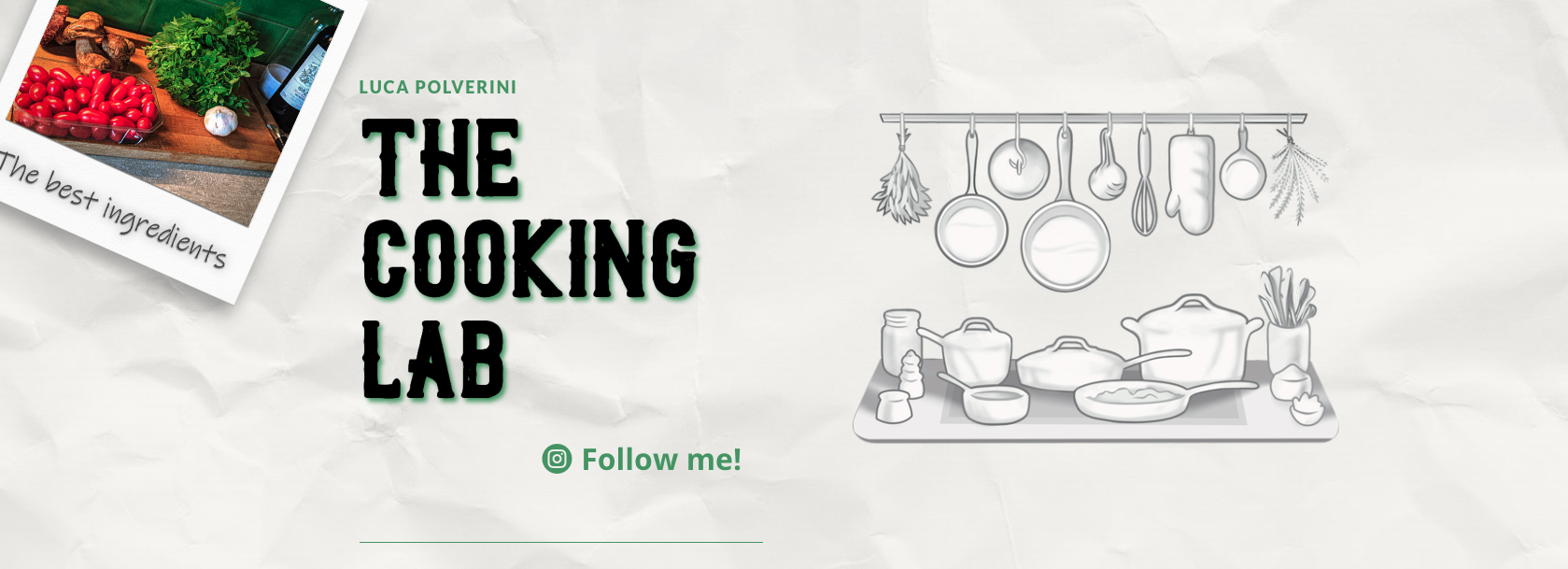
A bonus idea: a cooking experience in Florence - For anyone in or around Florence, I can personally recommend The Cooking Lab Firenze as a place to explore if you are looking for a cooking experience to enjoy or give as a gift. I can vouch for its quality.
Gifts that help someone pursue a passion
Some gifts end up forgotten in a drawer. Others become the beginning of a new activity.
For someone who loves plants, we might choose a good pair of pruning shears, a durable gardening tool, a botany book, a gardening course or seeds suited to the space and climate in which they will be grown. For someone who loves cooking, it could be a well-designed utensil or an unusual ingredient. For a keen repairer, a quality tool. For an artist, a notebook or carefully selected materials.
In these cases, the gift is not just the object itself. It is the opportunity to do something, learn a skill or devote time to an interest that may have been neglected during the year.
Relevance matters here, too. Before buying a plant-growing kit, for instance, make sure the recipient has enough light, space and time. A sustainable gift should not turn into an unwanted responsibility.
Where to look? For tools, favour specialist shops and products that can be repaired or are designed to last. A local nursery can recommend suitable tools and materials for a gardening enthusiast. For creative hobbies, try art-supply shops, independent stores and manufacturers' own websites.
If you would rather give the experience of learning something new, look for classes run by local professionals. Learning to prune a tree, bake bread, work with clay or identify wild plants can be much more rewarding than buying an object without knowing what the recipient really wants.
Coffee and chocolate: the pleasure of knowing what we consume
Food plays an important role in Christmas gifting. A bottle of wine, a special coffee, a bar of chocolate or a local delicacy can be a simple gift without being an anonymous one.
The key is to look beyond the packaging. Where does the product come from? Who grows or transforms it? What do we know about its supply chain? Is there reliable information about production conditions and the origin of its ingredients?
We will not always find answers to every question, but it is worth looking for producers who explain their work transparently. The quality of food also depends on the care behind it — although a compelling story is no substitute for checking the actual characteristics of the product.
That is one way to make a consumable gift more interesting: it becomes not just something delicious, but an opportunity to discover a place, a crop or a craft.
Caffè Doña Lucero: a tree and a story to savour
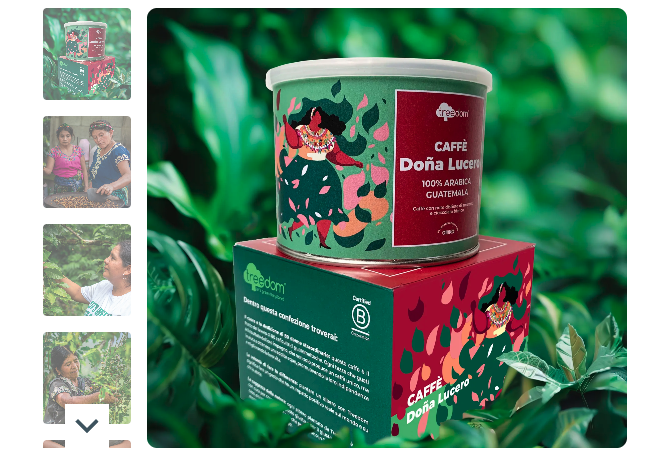
Caffè Doña Lucero is an option for coffee lovers who want to discover the story behind what they drink.
The project is connected to the work of 80 Indigenous women in Guatemala's Huehuetenango region. The gift combines a coffee tree with 125 grams of ground coffee for a moka pot. Developed with support from Treedom, the AMKA organisation and roasters belonging to the Caffè Speciali Certificati association, the supply chain aims to help the women growers receive fairer compensation for their work.
It is a thoughtful choice for anyone who enjoys discovering new coffees, appreciates products connected to a particular place, or would prefer a consumable gift to an object that might go unused.
Discover Caffè Doña Lucero on Treedom.
Ciòcchèbbuòno: chocolate with roots
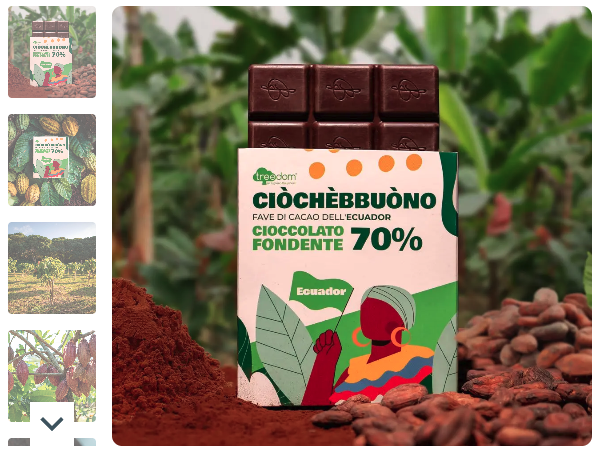
For chocolate lovers, Ciòcchèbbuòno combines a 75-gram bar of 70% dark chocolate with a cocoa tree.
The cocoa used for the chocolate comes from Ecuador. It is a gift for anyone who sees chocolate as a small pleasure to share, but also for those curious to learn more about one of the world's most important tropical crops — both for food and for the livelihoods of many farming communities.
The idea is simple: one part of the gift can be enjoyed, while the other opens a window onto a crop and an agroforestry project.
Discover Ciòcchèbbuòno on Treedom.
A plant or a tree: a gift that keeps growing
A tree is not the kind of gift you unwrap and immediately put on display. That is precisely what makes it interesting.
If you want to give someone a plant you have grown yourself, you can find plenty of advice on our blog, including in the StebyStep series. It might be a rooted cutting, a seedling grown from a seed collected on a walk, or a small tree you have cared for over several months. The time spent growing it becomes part of the gift.
If you would rather buy a plant, visit a local nursery and ask for advice on the species best suited to the recipient. For a tree intended for a garden, consider the climate, available space, its mature size and its maintenance needs. A tree is a living organism, not simply a decorative accessory.
For online shopping, Vannucci Piante offers a catalogue of fruit trees and other plants, with options for different growing spaces.
And if you would like to give a tree to someone who does not have a garden or a piece of land, there is another option: choose a tree with Treedom.
Giving a tree through Treedom means supporting an agroforestry project and being able to follow its story through the platform. Trees are geolocated and photographed when they are planted, allowing recipients to learn about the project they are part of and follow its progress over time.
Of course, a tree does not grow in a day, and its environmental contribution depends on many factors: the species, local conditions, project management and its ability to survive over time. It is not an automatic solution to climate change, but it can be a way to support initiatives that integrate trees into agricultural systems and contribute to the regeneration of local landscapes.
Discover trees to give with Treedom.
Wine from a small winery: giving someone a taste of a place
Some bottles contain more than wine. They tell the story of a landscape, of people working the land, and of those who have decided to restore an old vineyard or keep producing in a place at risk of being forgotten. This aspect of gift-giving matters to me because it reminds us that behind the things we buy there can be productive projects worth getting to know.
Cantina del Rospo is the winery I helped establish, so I know it rather well! It is based in San Giovanni delle Contee, in the municipality of Sorano in southern Tuscany. The project grew out of a desire to restore old vineyards and contribute to the vitality of the village through wine production. It focuses on traditional grape varieties and on a landscape that deserves to be discovered.
Over the years, the winery has also worked on practical sustainability initiatives, including the reuse of glass bottles. The idea is to extend the life of a container that has already been manufactured rather than automatically treating it as waste to be recycled.
A bottle from Cantina del Rospo (you can contact us here) can therefore be an interesting gift for someone who loves wine, but also for anyone who appreciates small producers and stories about people choosing to invest in a place. This does not mean that every artisan wine is automatically more sustainable than every other wine. It means choosing to find out who makes it, learn about their practices and decide whether we want to support that project.
And there is a very simple reason to give someone a bottle of wine: it is meant to be shared. It can accompany a meal, bring friends together or be opened slowly, one bottle at a time.
Sometimes the best gift is the one that creates an opportunity to spend time together.
Give someone dinner or a weekend in a small Italian village
There is another gift I would like to recommend, and perhaps it expresses the meaning I attach to sustainability better than anything else: spending an evening in San Giovanni delle Contee, perhaps turning it into a weekend away.
Here, too, I am talking about an experience I know at first hand. No pretending otherwise: I am a member of the Cooperativa di Comunità di San Giovanni delle Contee, a community cooperative established to help keep alive a small village of just 142 residents, countering depopulation and supporting local economic activity and services.
The restaurant serves regional cuisine, including handmade pasta, with an emphasis on local ingredients. In 2025, it was included in Slow Food's Osterie d'Italia guide, which recognises hospitality, regional cooking and attention to ingredient quality.
Why suggest it as a Christmas gift? Because we can give someone not just something to own, but a place to discover. Dinner can become an opportunity to explore the village, walk through its streets, learn about a community-led initiative and perhaps stay overnight. A simple gift can become a small journey.
I believe projects like the cooperative highlight an important aspect of sustainability that can get overlooked when we talk only about products and consumption. Sustainability is also about whether a place can continue to be inhabited, whether it can maintain its services and activities, create work and offer opportunities for people to meet.
Of course, one dinner cannot solve the problems facing a small village. But choosing to visit, eat at a local business and meet the people who keep the place alive means contributing, even if only for a day, to its local economy.
If you are looking for a gift for someone who enjoys travelling off the beaten track, discovering traditional food or learning about community initiatives, consider giving them dinner at Osteria Maccalè and an invitation to spend a weekend in San Giovanni delle Contee.
For information and bookings, contact the restaurant directly on +39 0564 383511 or +39 338 3758747.
A useful everyday object: Treedom merchandise
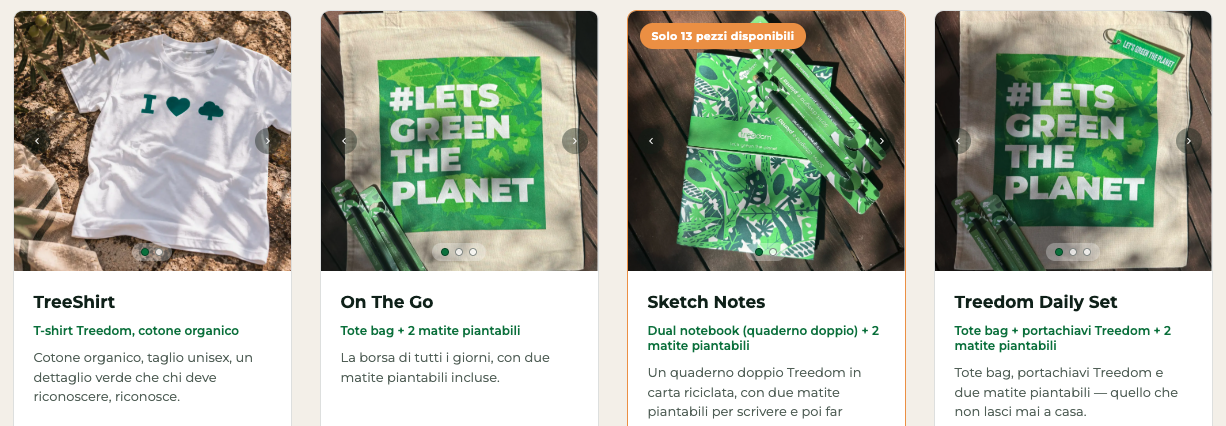
Not every gift needs to be an experience or a product connected to an agricultural supply chain. Sometimes we are simply looking for something that can accompany everyday life and remind the recipient of a shared interest or passion. In that case, merchandise can also be a sensible choice: a bag, a T-shirt or another object that genuinely suits the recipient's tastes and needs.
The principle remains the same: do not buy something simply because it carries a message we agree with. Choose something that will actually be used. Even an object connected to an environmental project should be judged on its practical qualities, durability and usefulness.
If you are looking for a gift for someone who loves trees and the world of Treedom, take a look at the official Treedom merchandise shop.
Discover Treedom merchandise.
How to choose a sustainable gift without getting it wrong
After all these ideas, it is worth pausing to ask a simple question: how can we tell whether a gift is genuinely sustainable?
There is no single answer that applies to every product. But there are some practical principles we can follow.
- Choose something the recipient genuinely wants. The most sustainable gift is unlikely to be one that ends up unused in a wardrobe.
- Think about durability. A well-made, repairable object that will be used for years may be preferable to a disposable product.
- Find out where it comes from. Whenever possible, look into who makes it, where it is produced and what is known about its materials and working conditions.
- Consider reuse. A second-hand, restored or repurposed object can be an interesting alternative to buying something new.
- Do not confuse packaging with sustainability. Beautiful wrapping can make a gift feel special, but it tells us little by itself about the product's impact.
- Consider people and places, too. Working conditions, the quality of economic relationships and the contribution a project makes to a community are all important factors to consider, based on concrete information.
Finally, remember that we do not have to turn every purchase into a perfect decision. The goal is not to prove that we are flawless consumers, but to learn to make more thoughtful choices.
A gift's value lasts beyond Christmas
I would like to return to Oscar Wilde's line with which we began. Knowing the price of everything and the value of nothing is a contradiction we can encounter when choosing presents, too.
We can compare prices, hunt for offers and chase the most desirable object of the moment without asking whether it is really what we want to give. Or we can try a different approach: think about the person, the things they love, the experiences they would like to have and the stories they might enjoy discovering.
A carefully chosen book, a handmade object, a bottle of wine, dinner in a small village or a tree to follow over time are very different kinds of gifts. They do not all have the same impact, and they do not meet the same needs. But they can share one characteristic: they were chosen for a reason that goes beyond the act of buying something.
Perhaps that is the point. A gift is not simply something that passes from one pair of hands to another. It is a way of telling someone that we know them, that we have thought about them and that there is something we want to share.
And sometimes it is also a way to support a project, a place or a community whose value we recognise.
This Christmas, we do not necessarily need to give more. We can try to give better. Not to spend more, or to feel like better people, but to make sure that what we give still means something after the festive season is over.

