


Jan 08, 2026 | written by: Tommaso Ciuffoletti


Yesterday, the international community received news of an unprecedented—though not entirely unexpected—decision: the United States of America, through an executive order signed on January 7, 2026, has initiated its withdrawal from 66 international organizations and treaties, including the United Nations Framework Convention on Climate Change (UNFCCC) and other key bodies for global climate and scientific cooperation.
This move makes the United States the first country in the world to formally exit the UNFCCC, the treaty that underpins the 2015 Paris Agreement, signed by nearly every country on the planet to reduce greenhouse gas emissions and contain global warming. According to established procedures, the withdrawal will take effect approximately one year after official notification.
“National interests”
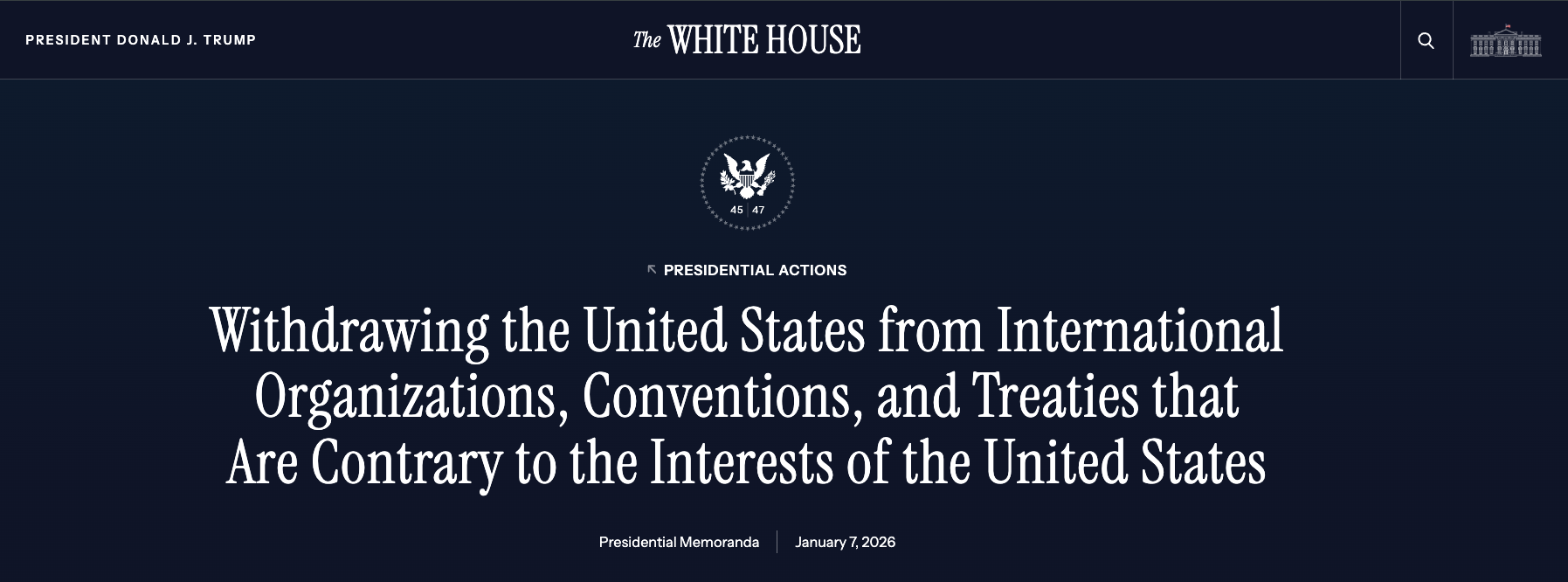
The White House justified the decision by citing the need to align international participation with the “interests of the United States,” arguing that many agencies and conventions are “redundant, poorly managed, or incompatible with national sovereignty.”
This choice is consistent with the foreign policy pursued by the U.S. administration in recent years: withdrawal from the Paris Agreement as early as 2025, cuts to funding for UN agencies, suspension of participation in organizations such as the World Health Organization and UNESCO, and a more aggressive stance in several areas of geopolitical competition, particularly with China.
However, the decision to also withdraw support from scientific bodies such as the Intergovernmental Panel on Climate Change (IPCC)—the global reference point for assessing climate science—has raised serious alarms among scientists, environmental organizations, and former diplomats.
Expected consequences
The U.S. withdrawal from climate treaties and related institutions carries both symbolic and material consequences:
Loss of international leadership. The United States has long been considered a central actor in pushing other countries toward more ambitious climate targets. Its exit risks diluting the momentum of collective action.
Weakening of multilateral structures. The UNFCCC and the IPCC are pillars of international climate negotiations. Without Washington’s active participation and contribution, cooperation dynamics may weaken, creating space for national disengagement.
Impacts on domestic U.S. policy. Without formal involvement in these bodies, climate science risks losing relevance in internal policy decisions, reinforcing approaches that deny or minimize the impacts of global warming.
Many experts also warn that such a move could set a negative precedent, offering other countries a convenient “alibi” to delay or dismantle their own climate policies.
The consequences for “others”
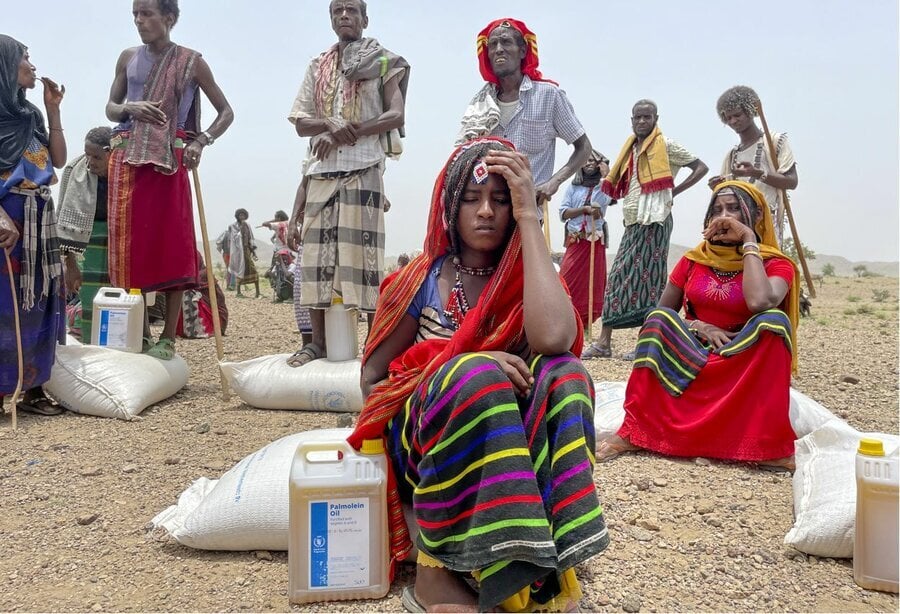
If we are honest, the real consequences of these decisions will fall—and are already falling—on the most vulnerable communities: the least fortunate people in the least fortunate countries of the world. The poorest, the least protected, those most dependent on subsistence agriculture, which already exposes millions to the risk of dying of hunger, silently, in 2026.
Indifference toward the condition of the most vulnerable is the moral hallmark of the new order now taking shape. An indifference reinforced by media silence, which distances public conscience from confronting the real consequences of these choices.
It is an indifference we intend to counter not only with our work, but also with our attention and our ability to tell these stories.
The international climate debate
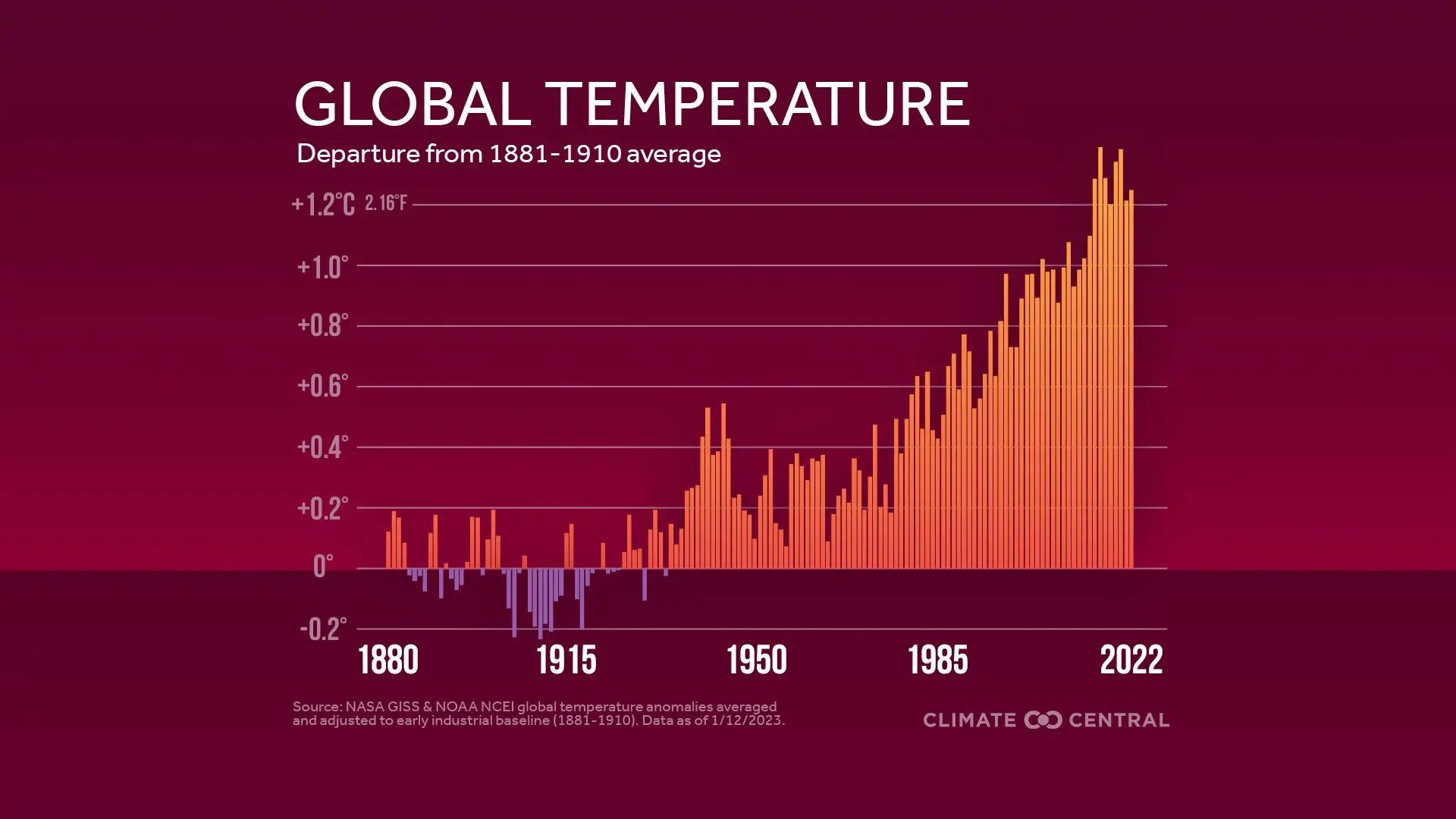
This shift comes at a time when global climate governance is experiencing a broad rollback of commitments. And yet extreme weather events—heatwaves, wildfires, droughts, floods—continue to increase in both frequency and intensity worldwide, with recent years ranking among the hottest ever recorded.
At the same time, public policies supporting climate action are under pressure in many parts of the world due to economic crises, geopolitical conflicts, and internal political tensions. Some governments are slowing investments in renewables and decarbonization policies, favoring short-term approaches that claim to prioritize traditional economic growth or energy self-sufficiency.
This tension between scientific urgency and short-term political interests remains one of the greatest obstacles to effective multilateral climate governance.
Beyond national borders, however, many countries, cities, regions, and companies continue—and in some cases accelerate—their emission reduction efforts. Civic associations, subnational coalitions, and private actors are attempting to fill the gap left by weakened central public policies.
Why we work even harder
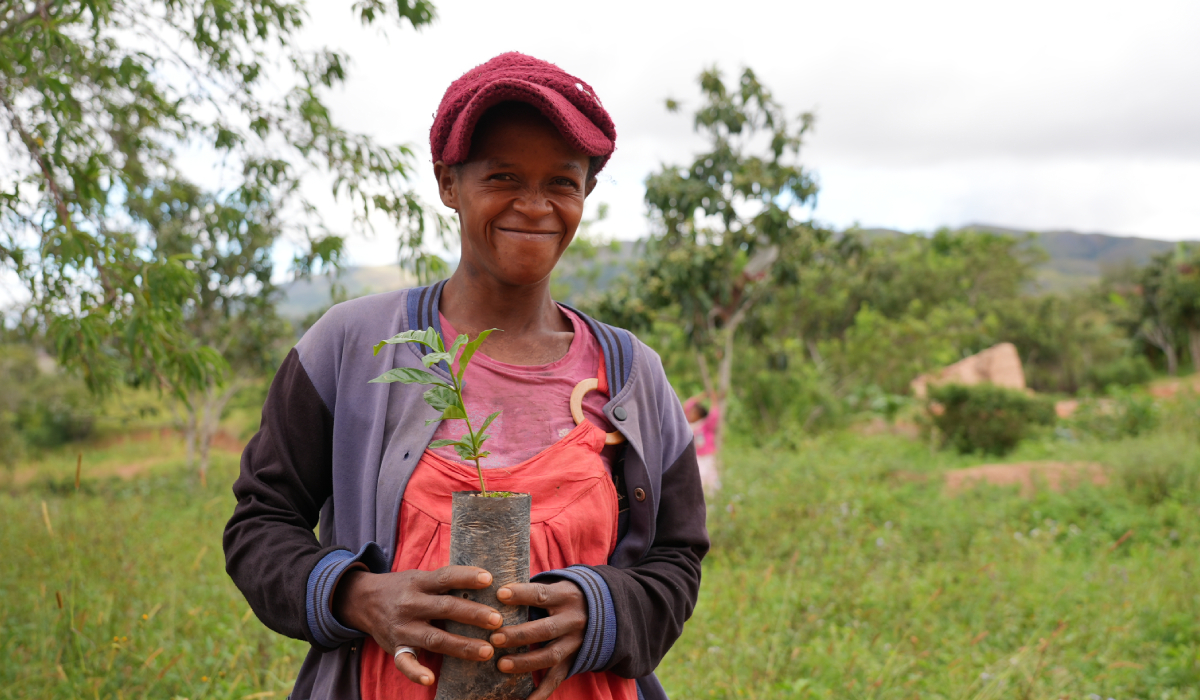
In this context of institutional disengagement, actions focused on land regeneration and natural carbon sequestration become even more valuable. Planting trees is not merely a symbolic gesture: it is one of the most concrete ways to:
-
absorb CO₂ from the atmosphere, contributing to climate change mitigation;
-
restore damaged ecosystems and biodiversity;
-
create local socio-economic opportunities, especially in rural or disadvantaged areas;
-
engage communities and younger generations in caring for the planet.
In a world where global institutions falter or retreat, bottom-up action becomes essential. The involvement of citizens, businesses, and organizations in tree planting and sustainable land management represents an alternative form of governance—one based on responsibility, cooperation, and long-term vision.
At Treedom, we continue to plant trees with renewed conviction. Despite setbacks in public policy, we believe that environmental and social regeneration is not an option, but an urgent and achievable necessity. Today, our work matters more than ever, because it shows that turning climate commitment into concrete action is possible, widespread, and already underway—even when those with the greatest power choose to step back.