


Oct 23, 2026 | written by: Tommaso Ciuffoletti


Decisions Don’t Stop at Borders. Neither Should Our Responsibility.
The Trump administration has dismantled international cooperation programmes and initiated the United States’ withdrawal from key bodies involved in climate cooperation. The consequences of these decisions also affect people living far from the United States, who have no way to influence them through the ballot box.
That is why, ahead of the midterm elections, we have decided to plant 470 trees and write to the new members of the US Congress. We want to remind them that a tree planted on the other side of the world can benefit everyone—even those who did not plant it.
A tree planted in Kenya, Guatemala or Nepal can help regenerate an ecosystem, absorb CO₂ and support the work of the farming communities that care for it. The benefits of that tree do not depend on the political beliefs of the people who may benefit from it, nor do they stop at the borders of the country where it was planted.
It is a simple but important point: many of the environmental and social challenges that shape our future cannot be addressed within the borders of a single country. And the decisions made by the leaders of major powers can profoundly affect the lives of people who had no part in those decisions and cannot vote to change them.
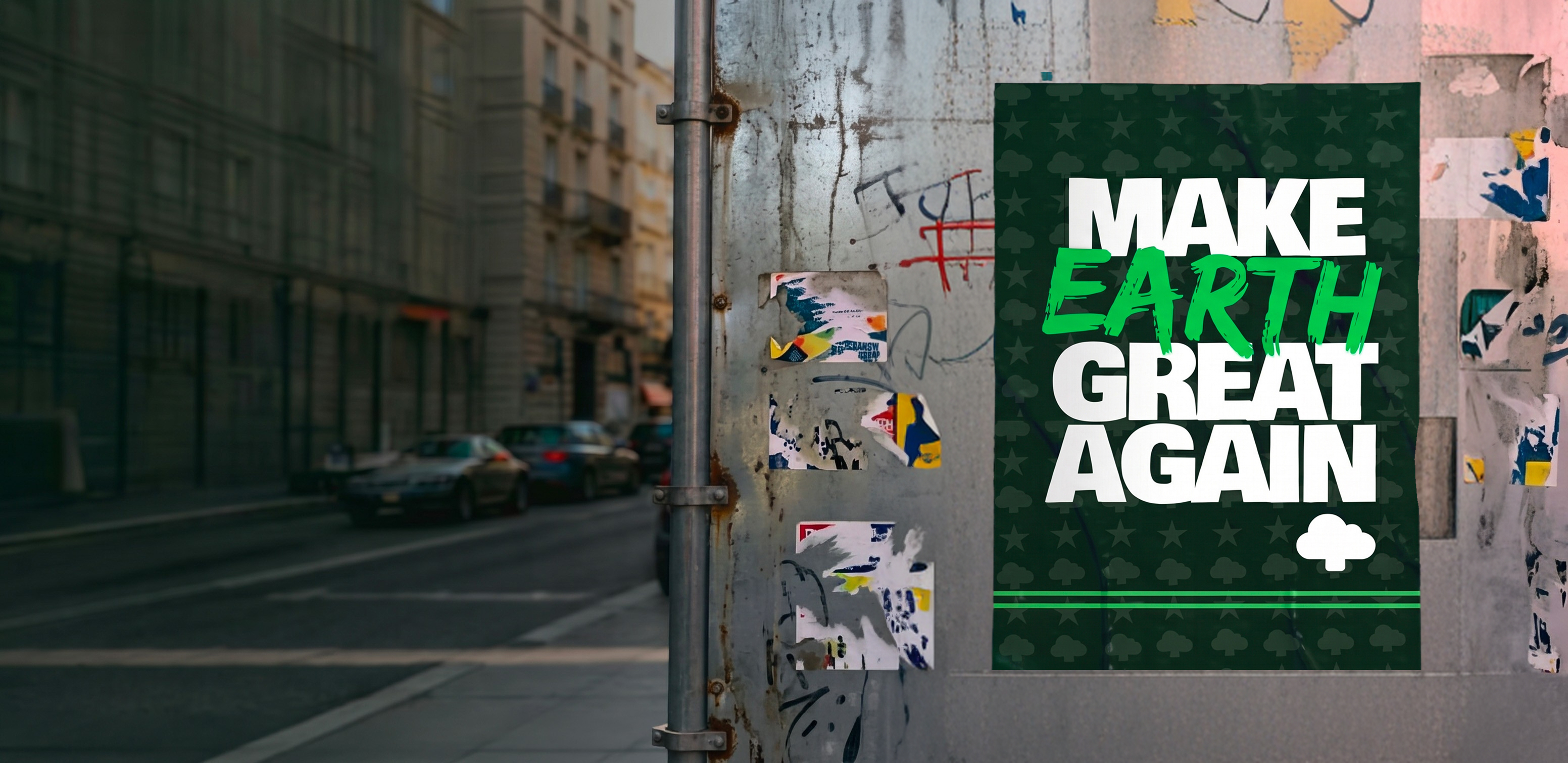
This is the idea behind Make Earth Great Again, the campaign we launched ahead of the US midterm elections on 3 November 2026. We do not endorse any candidate or political party. We want to draw attention to the global consequences of political decisions on the environment, climate and international cooperation—and remind people that even when we cannot vote, there are other ways to make our voices heard.
When a Government’s Withdrawal Becomes Everyone’s Problem
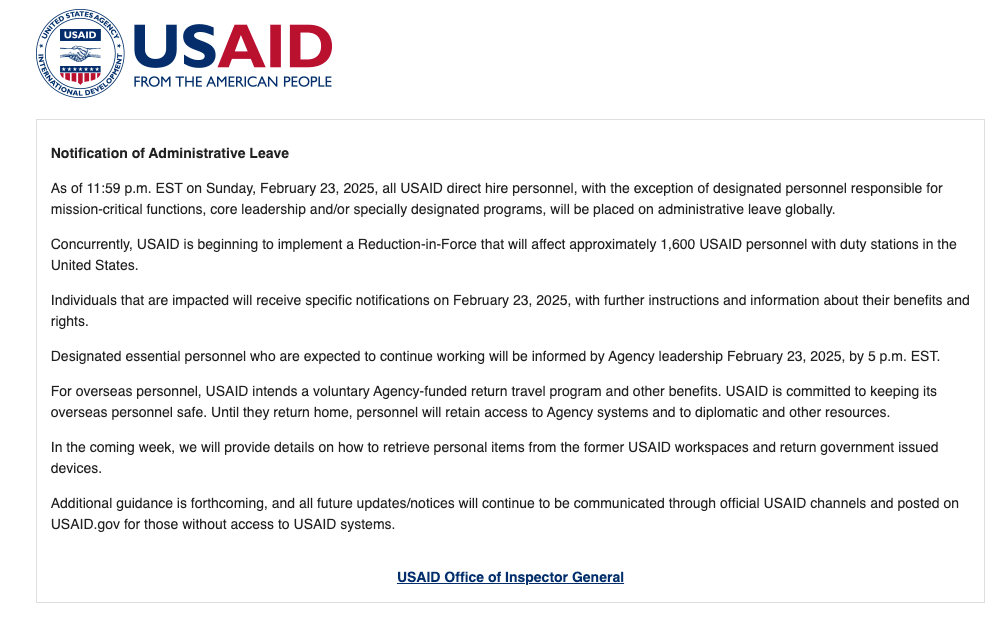
In recent years, and particularly since Donald Trump returned to the White House, the United States has made a series of decisions that have scaled back its commitment to international cooperation and the fight against climate change. These are not merely changes in domestic US policy: given the country’s economic, diplomatic and scientific weight, these decisions can have enormous and tragic consequences around the world.
On our blog, we have explored two aspects of this shift. In our report The End of US Aid: Condemning Millions to Death in Silence, we looked at the dismantling of USAID, the United States Agency for International Development, initiated by Trump’s second administration. In The Day the US Withdrew from Climate Action Too, we examined the US retreat from international climate cooperation frameworks.
The case of USAID makes the human impact of these decisions particularly clear. A study published in The Lancet in 2025 estimated that, between 2001 and 2021, programmes funded by the agency helped avert more than 91 million deaths across 133 low- and middle-income countries, around 30 million of them among children under the age of five.
The same study modelled the effects of the drastic funding cuts announced and implemented in 2025. If these cuts continue, they could lead to more than 14 million additional deaths, including around 4.5 million children under the age of five, by 2030. These are scientific projections, not deaths that have already occurred: they describe the risk associated with continuing the cuts, not a confirmed death toll. But the scale of the projected consequences is unequivocal.
Behind these figures are health programmes and interventions addressing HIV/AIDS, malaria and tuberculosis, as well as support for nutrition, maternal and child healthcare, and food security. The study’s authors estimate that, during the period analysed, USAID funding was associated with a 65% reduction in HIV/AIDS mortality, a 51% reduction in malaria mortality and a 50% reduction in mortality from neglected tropical diseases.
Cutting off this funding risks reversing decades of public-health progress, with the human cost falling above all on the most vulnerable populations. So this is not simply about closing an agency or cancelling programmes. It is a political decision that, according to estimates published in one of the world’s most authoritative medical journals, could cost millions of people their lives.
The US retreat on climate raises a similar issue, albeit through different mechanisms. Climate change does not stop at national borders: emissions, warming oceans, extreme weather events and ecosystem degradation have effects that spread around the world. US participation in international agreements and bodies matters precisely because the country is one of the world’s largest economies and a decisive actor in energy and climate policy.
This is the point we want to emphasise: political decisions have consequences that extend far beyond those who make and support them, especially when they are made by a power such as the United States, whose economic, political and diplomatic weight shapes global balances. When Washington cuts international aid or withdraws from climate cooperation frameworks, the effects are not limited to American citizens: they reach communities, institutions and territories around the world. And when these decisions concern the climate, ecosystems or access to essential resources, no national border can truly contain their consequences.
We Can’t Vote, but We Want to Make Our Voices Heard.
On 3 November 2026, the United States will hold its midterm elections, which take place halfway through a president’s term and can shift the balance of power in Congress. This year, all 435 seats in the House of Representatives and 35 of the Senate’s 100 seats will be contested: 470 seats in total.
For those of us living outside the United States, these elections raise a concrete question. We cannot take part in the vote, but decisions made by the US Congress can affect our lives, the future of communities most exposed to the consequences of climate change, and the resources available for international cooperation.
That is how the idea for Make Earth Great Again came about: to turn an American political event into an opportunity to share a message that belongs to no party, but matters to everyone.
Our goal is to plant at least 470 trees, one for every seat being contested. If we reach this target, we will send a letter to each newly elected member of Congress, reminding them that the decisions they make will have consequences beyond the borders of the United States.
We do not want to tell American voters who to vote for, nor do we claim to offer a single political solution to complex issues. Instead, we want to draw attention to a shared responsibility: anyone holding public office—especially in a country with such a significant influence on global affairs—should also consider the international impact of their decisions.
A Tree for Those Who Don’t Share Our Views, Too
Planting a tree alone will not solve the climate crisis, replace public policy or automatically make up for the consequences of bad decisions. But when it is part of a long-term agroforestry project, a tree can help restore land, support biodiversity, protect soil and complement the farming activities of local communities.
This is the kind of practical action our work is built around. Its benefits can be shared by people who live in different places, have different backgrounds and do not necessarily agree on political choices.
That is why we have decided to plant one tree for each of the 470 seats being contested, without distinguishing between parties, political leanings or candidates. This campaign is not an electoral endorsement. It is a way of affirming that environmental responsibility—and the consequences of public decisions—must also be considered from the perspective of those who will experience their effects far from where they are made.
The letter we will send to the new members of Congress expresses precisely this idea. We will not ask them to agree with us on everything. We will ask them to consider the global reach of their decisions, because the climate, ecosystems and people’s living conditions cannot be confined to a single legislative term or a single country.
The letter will close with a simple sentence: “After all, we planted a tree for you, too.”
This is not a personal provocation. It is the very point of the initiative: a tree can generate benefits that do not belong exclusively to the person who bought it or supported its planting. It can contribute to environmental restoration and support the people who care for it, regardless of the political views of those who may benefit from it elsewhere.
470 Trees to Get a Message Across
Make Earth Great Again is rooted in the belief that environmental issues cannot be separated from political choices and the responsibilities of those in power. And when those choices have global consequences, responses can and should cross national borders, too.
We cannot vote in the US elections. But we can take part in an initiative that focuses on how public decisions affect the planet and its people. We can help plant 470 trees and, if we reach our goal, get our message to the new members of Congress.
The campaign does not claim that an individual gesture can replace the policies needed to tackle the great challenges of our time. Rather, it aims to remind us that there are practical ways to support environmental restoration and take a stand on the role politics plays in shaping the conditions for it.
A tree planted on the other side of the world can contribute to a shared good. That is why we will plant one for those who make decisions we cannot directly influence, too. We all share the same planet. And we planted a tree for you, too.
Here is the letter we will send.
Dear Representative,
Congratulations on your election to the United States Congress.
We are writing to you from Italy. We may not be among your voters, and we may not share your political views. But there is something we certainly share: the planet we all call home.
The decisions you and your fellow members of Congress make on climate and the environment will have consequences far beyond the borders of the United States. They will affect people, ecosystems and communities around the world, including us. That means that even though we cannot vote for you, we still have a reason to make our voices heard.
That is why, in connection with the recent midterm elections, we set ourselves a goal: to plant at least 470 trees, one for every contested seat in Congress, and perhaps a few more.
These trees are much more than a symbolic gesture. They are planted through projects that support local communities and farming families. As they grow, they will help restore ecosystems and absorb CO₂ from the atmosphere. Their benefits will not stop at the borders of the countries where they are planted: they will reach all of us. You included.
We planted these trees to convey a simple message: the consequences of our actions do not stop at the borders we draw on maps. Nor should our sense of responsibility.
We are not asking you to agree with us on everything. We simply want to remind you that when it comes to the future of the planet, we are all on the same side, whether we realise it or not.
So, as you prepare to begin your term, we hope you will also keep in mind the people who live beyond your constituency but will share the consequences of your decisions.
After all, we planted a tree for you, too.
We hope it does you good.
And we hope you will help ensure that it does good for future generations, too.
Kind regards,
The Treedom team
Make Earth Great Again

